Vibecoding for Lawyers: Innovation, Ethics, and Responsible AI-Driven Development in Legal Practice
To register for the upcoming live webinar, please Click Here
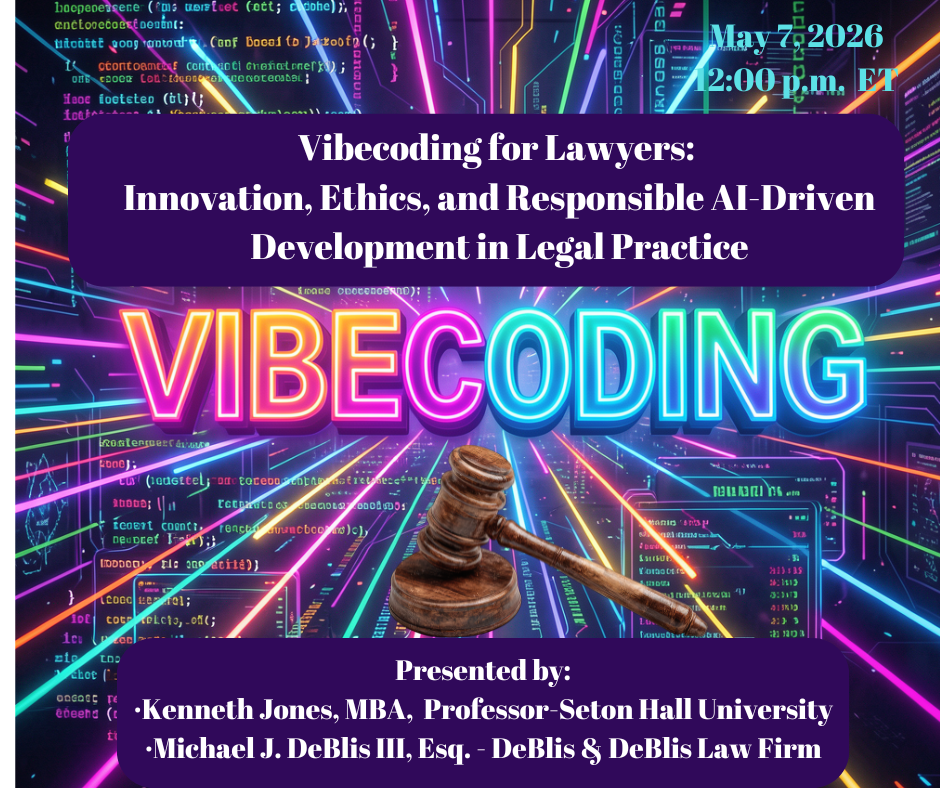
This program provides attorneys with a practical and ethical framework for understanding and responsibly leveraging “vibecoding” — the use of generative AI tools to rapidly build applications, workflows, and internal legal solutions without traditional software development. Designed specifically for legal practitioners, the session examines how AI-enabled citizen development can improve efficiency, client service, and innovation while maintaining compliance with professional obligations.
Attorneys will learn:
- What vibecoding is and how it differs from vendor-based legal AI platforms
- how to evaluate confidentiality, privilege, cybersecurity, and data governance risks when building or deploying AI-driven tools
- how to determine when a prototype must transition to a firm-approved enterprise platform
- how to assess integration considerations involving document management systems, cloud storage, and matter management tools
- how to implement governance guardrails to avoid ethical and supervisory violations
The program specifically addresses ABA Model Rules of Professional Conduct 1.1 (Competence, including technological competence), 1.6 (Confidentiality of Information), 5.1 and 5.3 (Responsibilities of Partners, Managers, and Supervisory Lawyers and Nonlawyer Assistance), and 1.4 (Communication with Clients where AI tools materially affect representation), and discusses practical steps attorneys can take to remain compliant while innovating responsibly.
To register for the upcoming live webinar, please Click Here
More Webcasts
Best Behavior: Effec...
This program will address the ethical obligations of Lawyer Advocates representing clients in arbitr...

Complying with the M...
This course will provide a detailed overview of the Medicare Secondary Payer act as well as provide ...
The Practical Lawyer...
Review the basic software concepts and effective uses of generative AI, prompting strategies, and me...
AI Governance in the...
AI, an innovative technology that was once a supporting act for digital transformation, business str...
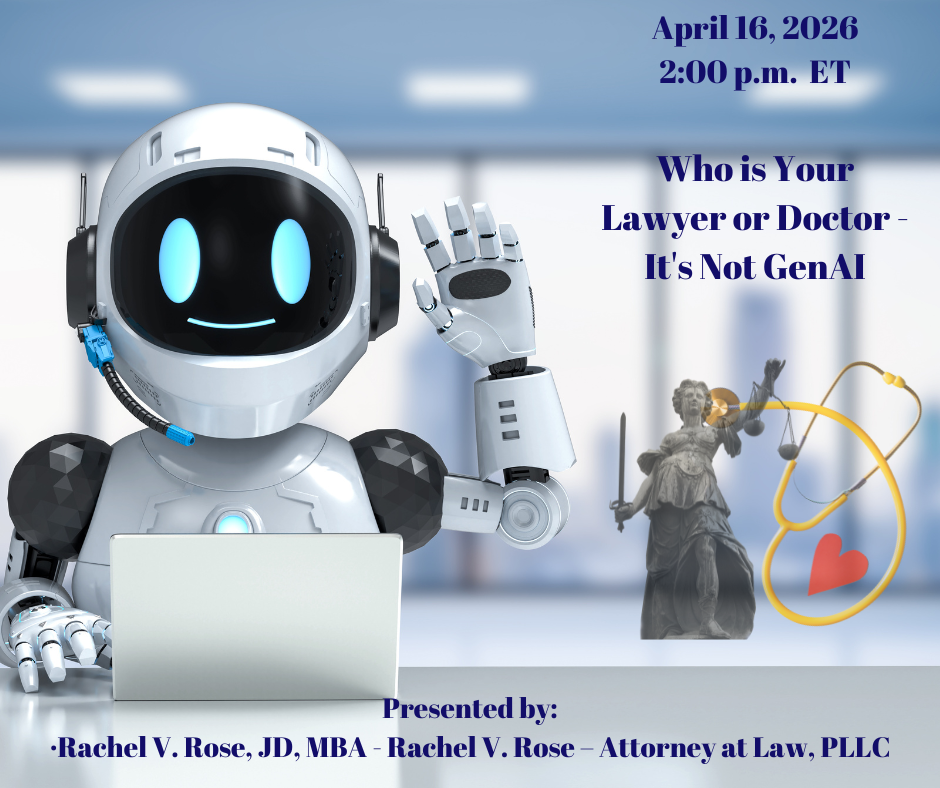
Who is Your Lawyer o...
Recent court opinions, a lawsuit against OpenAI Foundation and OpenAI Group PBC aka ChatGPT for the ...
Escaping the Perfect...
“Everyone tells me I’m doing a great job. My clients, my colleagues, my family. Wh...
Litigation Strategie...
This program is geared towards lawyers, experts, commercial property owners, and others in the envir...

Litigation Series: E...
Part 1 - This program focuses specifically on cross?examining expert witnesses, whose credentials an...
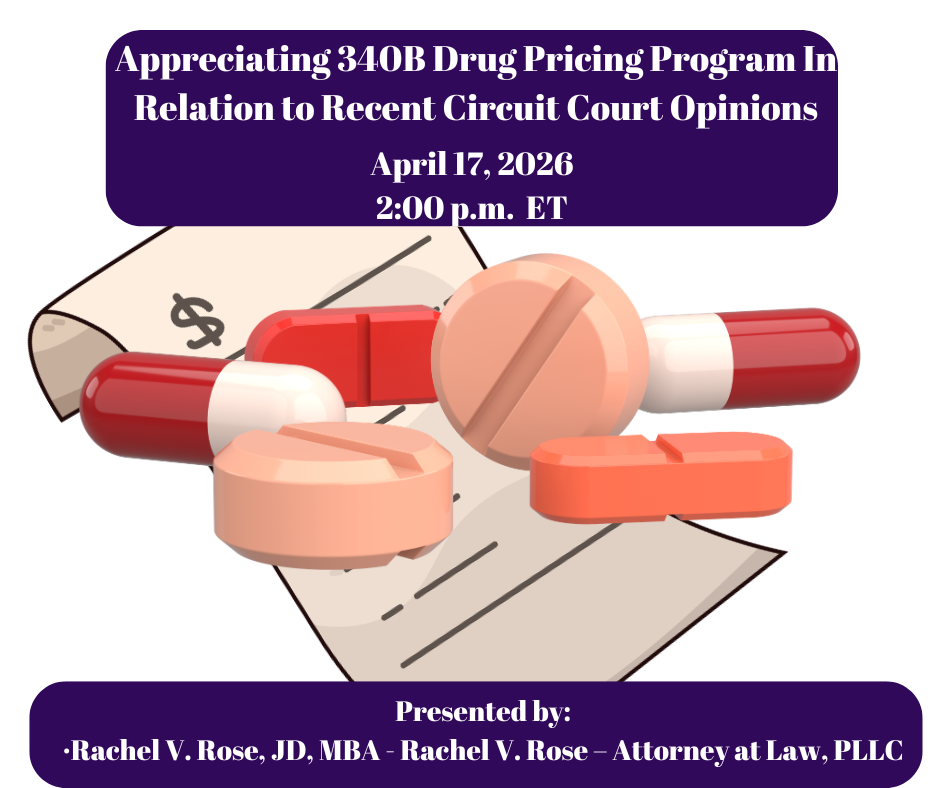
Appreciating 340B Dr...
Established in 1992, the 340B Drug Pricing Program has many nuances and applications to different si...
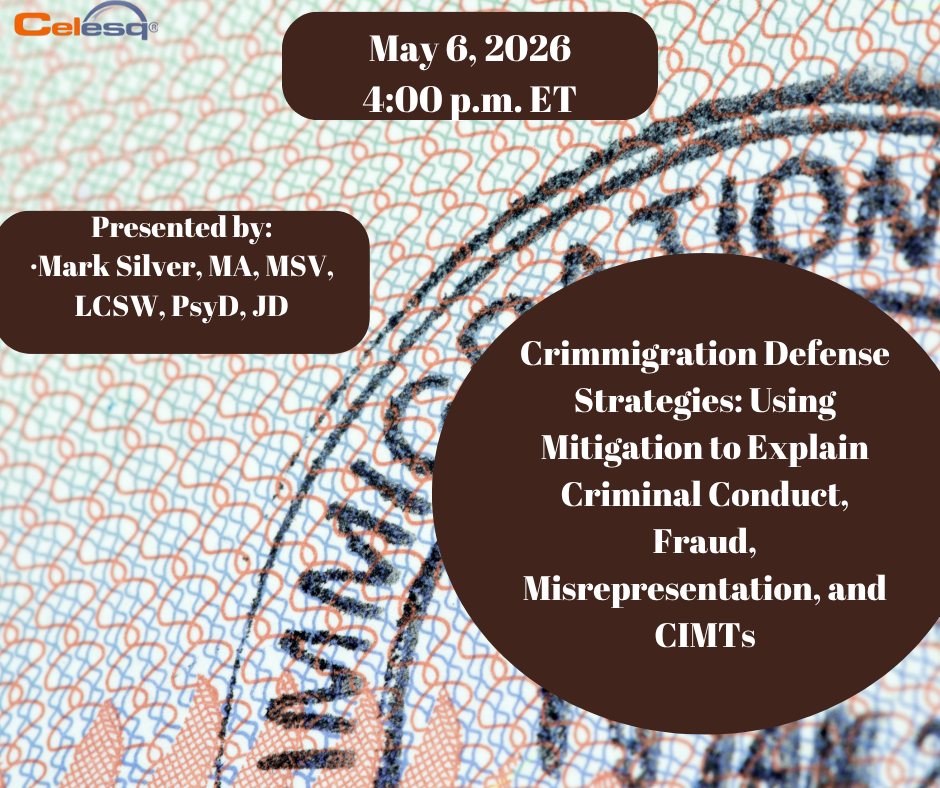
Crimmigration Defens...
This program addresses the critical intersection of criminal and immigration law, focusing on how mi...